Rand Paul Wants To Save Small Businesses
The Big Bank Act Would Do It
Support Rand Paul Review with 35% off
Small business is to the economy what the nuclear family is to culture. If you want to destroy Western civilization, you have to get rid of them both.
Pornography is ubiquitous. LGBT activists set out to confuse children and confound the traditional concept of marriage and its biblical roots. Everything is upside down.
The majority of LGBT adults now want to get married someday, according to Pew Research. So do the majority of heterosexual adults.
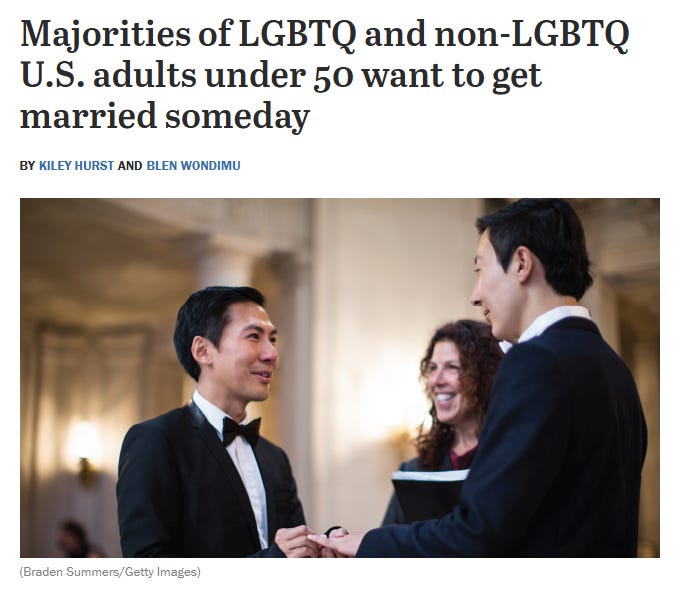
The race is on. The winner gets all.
Leftists continue to push modern conceptions of morality where there is no God and everything is permitted. Even when they allow God, nothing is off limits, and “Do what thou wilt shall be the whole of the law.”
Desire eclipses reason, and divorce rates climb. At this point, the odds are almost even as to which side—Leftists or normal people—will win the race.
With Trump in office and the Christian revival spurred by the assassination of Charlie Kirk, normal people currently have a slight edge in the culture wars—for now.
On the economic side of the equation, small businesses aren’t faring as well.
The Death Knell Of Small Business?
As the Chief Economist of First Trust LP and the Former Chief Economist of the Joint Economic Committee of the U.S. Congress, Brian Wesbury knows what he is talking about.
Wesbury spelled it out in a post on X, “Powell says if he can’t pay banks to hold reserves, the Fed would ‘lose control over rates.’”
Jerome Powell heads the Federal Reserve and has been in a prolonged battle with President Trump over interest rates. Trump wants them lowered because the economy is starting to hum.
Why would Powell pay banks to hold reserves?
Wesbury knows. It’s “because the Fed has flooded banks with so many reserves they don’t trade federal funds anymore. The Fed just sets the rate wherever it wants. It’s ‘Price Fixing’.
Put another way, the game is fixed.
“There is no real market anymore,” continues Wesbury. “We grew our balance sheet so much that we can’t unwind it without screwing up the system.”
If there is no “real market”, there can’t be a free market economy. Can you hear the Leftists smacking their lips?
Is the “system” so screwed up that it can’t be fixed? That’s what the Left wants you to think.
“This is exactly what Democrats are saying about COVID-era Obamacare subsidies. Now that they are in place, we can’t take them away without causing pain. This is no way to run a government. Keep making it bigger and more powerful, and then say dismantling it will cause harm.”
Too big to fail. Sound familiar? The only way to go is to make whatever is big even bigger—banks, government, megacorporations.
Who gets left holding the bag? Small businesses.
“Just stop,” Wesbury concludes. “Stop it all.”
The Rand Paul Solution
In June of this year, Sen. Paul introduced the End the Fed’s Big Bank Bailout Act. The legislation would prevent the Federal Reserve from paying interest on balances held at Federal Reserve banks.
“This is why I introduced my End the Big Bank Bailout Act,” Paul posted on X, “which would prevent the Fed from paying interest rates to big banks that refuse to lend money to small businesses and American families.”
Simply put, the legislation would end the Fed’s stranglehold on the U.S. economy. Rand is trying to teach the bigwigs the basics of free market society.
“Our country is over $36 trillion in debt,” Paul said. “But no one pays attention to the hundreds of billions of dollars the Federal Reserve unnecessarily paid to banks to NOT lend money to consumers.”
Did you get that? The Fed pays banks not to lend money. This could be the death knell for small businesses that rely on loans to expand or to stay afloat when the economy takes a dive.
The Feds didn’t pay interest to banks on reserve balances until 2008. That was the year Congress enacted the Troubled Asset Relief Program, a $700 billion federal program to purchase troubled assets from financial institutions.
Who was the president at the time? The Left’s Big Gov dream candidate, Barack Obama.
Interest payments averaged $5 billion a year from 2008-2016. Nowadays, with the Fed’s rate above 4%, the payments have skyrocketed.
“In 2022, the Fed paid $60 billion to banks,” Paul said. “In 2023, the Fed payments to banks rose to over $176 billion. And in 2024, the Fed’s subsidy to banks rose to about $186 billion. The Fed has been operating at a loss since September 2022.”
“While the Fed no longer has profits and ceased returning those profits to the taxpayers by remitting those funds to the Treasury,” Paul continued, “it still, to this very day, pays what has amounted to hundreds of billions of dollars to banks.”
Paul contends that cutting off the interest payments to banks could save more than a trillion dollars over the next decade.
“At a time of persistent and self-imposed worsening losses at the Fed, the manipulators of the American economy continue to pay banks to do nothing but have their funds sit in a safe,” Paul continued.
“How can anybody, especially the populist Republicans and the entire Democratic Caucus, defend such a subsidy when supposed income inequality and the national debt are at the top of the political agenda?”
How could they, indeed.
Instead of the money sitting in banks, the bankers could do what they are supposed to do: Lend money to small businesses that are at the very heart of the free market enterprise.
Why would they not do this?
The answer is pretty simple: Leftist government officials want small businessmen to starve, just like they aim to make the nuclear family disappear.
Luckily, somebody is looking out for the free market economy. It’s Rand Paul, who is married to a woman and has three children. He’s an American through and through.


KUDOs , Rand!
Makes sense to me, but is there a chance in hell this will pass?when you vote no on everything, it might be hard to get support in Congress. I don’t like abrupt changes in policy and prefer a staged plan. Maybe incrementally reduce the rate paid to banks monthly over a two year period to zero?