
U.S. Senator Rand Paul recently posted on X with a stark warning about deepfake technology.
“Deepfake lies can wreck an election in days. Free speech means you can mock politicians. It does not mean you can falsely accuse someone of crimes or treason. We need real accountability for defamation while protecting satire and dissent.”
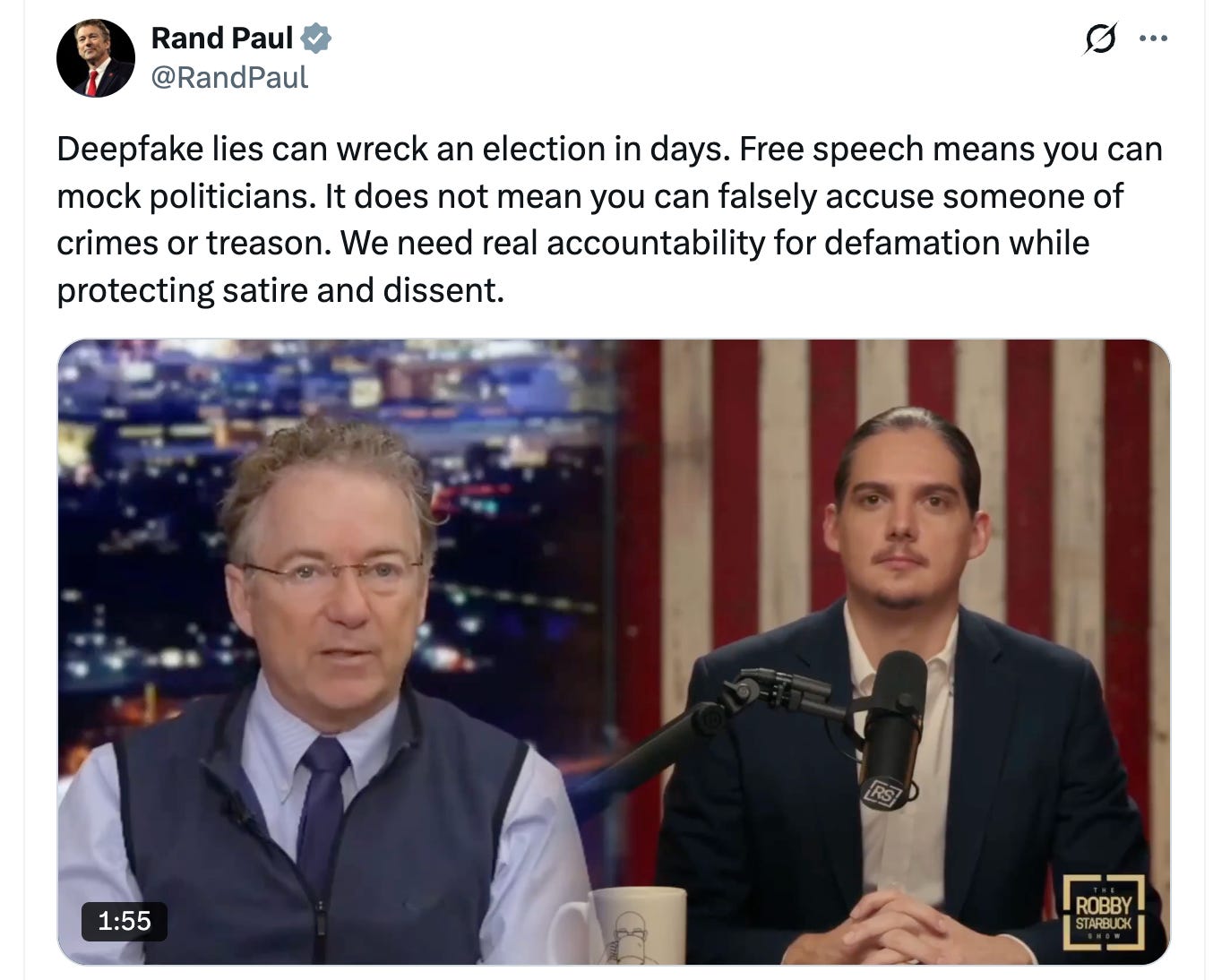
Ironic that deepfakes are causing concern in the U.S. when someone can fake a politican’s identity, but knowing Rand and Ron Paul’s history of calling out fraud and abuse in government generally, we can guess he’s trying to get the attention of politicians who could be deepfaked themselves.
Just how bad is the deepfake situation?
In mere seconds, AI can swap faces, alter voices, and fabricate entire scenes that look indistinguishable from reality. Someone can accuse a public figure of treason or corruption with chilling plausibility. Microsoft recently revealed deepfake capacity with one audio clip and one photograph, and you can barely tell it isn’t real.
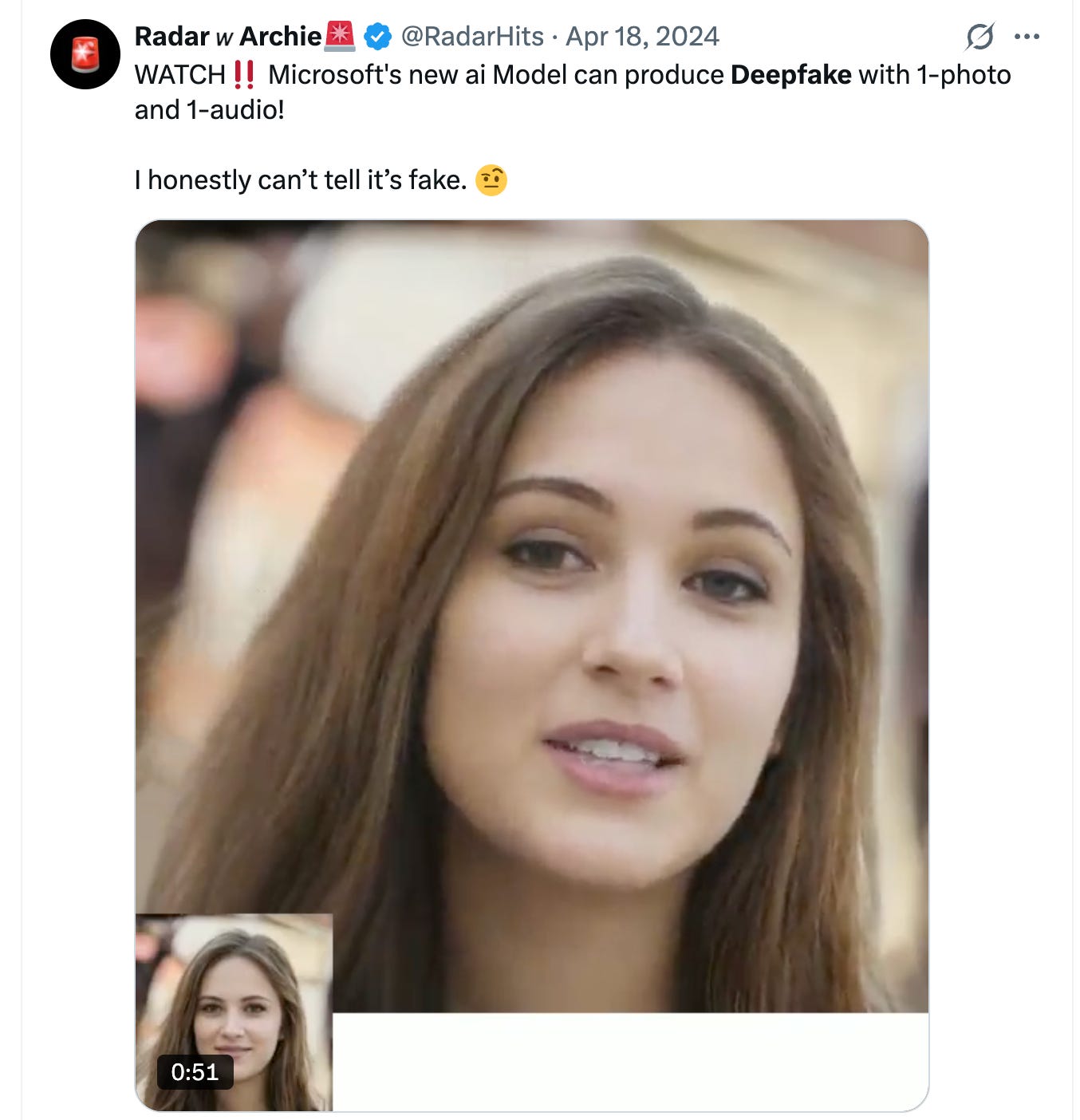
They can also deepfake an innocent person or a patriot and make them look and act like they said or did something that they never did, and with the speed of the internet, that deepfake is now all over the world, sometimes too fast to undo the actions that the Deep State might take with really elaborate deep fakes.
They’ve already pushed against freedom of speech and the the right to bare arms, so what’s stopping them from using deep fakes as “proof” that something happened, especially as AI gets more advanced by the week?
One viral deepfake could swing voter sentiment, spark outrage, or derail a campaign before fact-checkers catch up.
Paul’s point is precise: satire and criticism are sacred, but weaponized falsehoods that destroy reputations demand consequences. Look no further than what they’re trying to do to politicians who stand up against AIPAC and the war.
This isn’t hypothetical.
Deepfakes have already infiltrated elections worldwide.
From fabricated candidate speeches to staged scandals, the technology’s speed and accessibility—thanks to freely available AI tools—make it a perfect storm for misinformation.
A single convincing video can reach millions in hours, eroding trust in institutions faster than any traditional smear campaign.
Paul’s call for “real accountability” might be too late.
Blanket censorship risks chilling free speech, but targeted defamation laws, civil penalties, and platform could be the only way we can save a sense of our human identities at all.
The Deepfake Threat Extends Far Beyond Politics
The same technology that can fake a politician’s confession is being used to steal ordinary people’s identities in deeply personal, devastating ways—most commonly through non-consensual deepfake pornography. Is it any surprise since we’ve learned that some guy named Mo could be using Ai to make millions off a woman’s identity on only fans, robbed from her without her even knowing?
Here, the damage isn’t just reputational.
it’s psychological, professional, and existential.
Victims see their faces and bodies superimposed onto explicit content without consent, often shared virally. The result can be humiliation, job loss, mental health crises, and a permanent loss of control over their own image.
Whole countries are stepping up aggressively—not just punishing creators, but actively helping victims reclaim their identities through lawsuits, takedowns, and compensation.
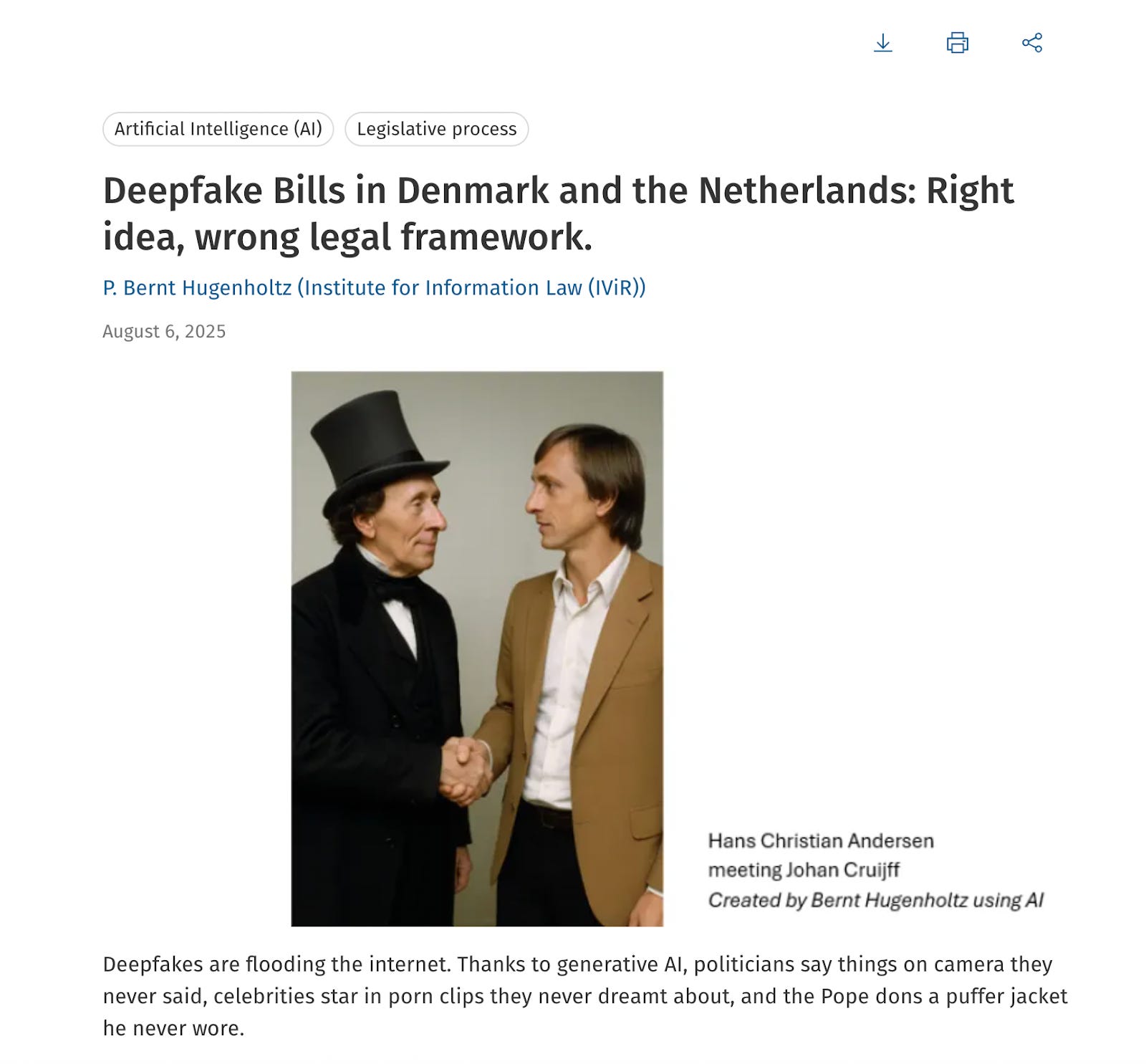
The Netherlands stands out as a leading example. In recent years, several Dutch celebrities publicly announced they had become victims of deepfake porn videos. They collectively filed criminal charges, marking a watershed moment.
Dutch law has adapted rapidly. In 2023, an Amsterdam court handed down the country’s first conviction for deepfake pornography—180 hours of community service—by broadly interpreting Article 139h of the Penal Code (revenge porn provisions) to cover AI-generated “images of a sexual nature,” even if no real footage of the victim existed.
The ruling recognized that realism is what matters: if viewers believe it’s genuine, the harm is real.
Victims aren’t stopping at criminal complaints.
Civil remedies are proving even more powerful for “giving people’s identity back.” Under portrait rights (a unique Dutch doctrine protecting one’s likeness), individuals can sue creators and platforms to demand immediate removal of content.
The General Data Protection Regulation (GDPR) adds another layer: a person’s face in a deepfake qualifies as personal data, triggering rights to erasure and compensation for damages. Tort law further allows claims for reputational harm and emotional distress.
Preliminary relief proceedings enable swift court orders to take videos offline before they spread further. In practice, this means victims can force platforms to delete deepfakes, sue anonymous creators when identifiable, and recover financial losses—literally reclaiming ownership of their digital selves.
The Netherlands isn’t alone. A wave of countries is enacting similar measures, blending criminal penalties with civil empowerment:
US Laws Against Deep Fakes
IN America, federal proposals like the Defiance Act grant victims explicit rights to sue creators and distributors of non-consensual deepfake pornography for damages. States such as California already allow civil lawsuits (AB 602), while the Take It Down Act (passed the Senate in late 2024) mandates 48-hour removal from platforms. District attorneys, including in San Francisco, have sued websites hosting deepfake generators.
UK, South Korea, Australia, Croatia Deep Fake Laws
The Uk has amended its Online Safety Act to criminalize both the creation and sharing of sexually explicit deepfakes without consent, with penalties up to two years in prison.
South Korea has taken the hardest stance, criminalizing not only creation and distribution but even possession and consumption of deepfake porn—punishable by up to three years in prison or heavy fines. This followed widespread school scandals involving students as victims.
Australia criminalized both creation and distribution in 2024, treating it as an aggravating factor in sentencing.
Croatia became the first member state to enact specific deepfake criminal provisions in 2021, with Spain drafting new laws targeting AI-generated images and voices.
Broader EU efforts aim to harmonize criminalization by 2027, leveraging GDPR across borders for takedowns.
Deepfakes don’t just create fakes—they steal identity.
By enabling lawsuits for removal, damages, and injunctions, governments are restoring agency. Platforms face pressure too; many now deploy detection tools and respond faster to reports.
Of course, challenges remain.
Creators often operate anonymously or abroad. Detection AI lags behind generation tools. Free speech concerns require careful drafting—Netherlands and others emphasize “realism” and “harm” thresholds to avoid overreach. Education and watermarking standards will be crucial supplements to legislation.
Senator Paul’s post is a timely reminder that deepfakes threaten the public square. But the personal stories of victims in the Netherlands and beyond show the human cost is even more frightening.
As AI evolves, so must our response to its output.
We must protect democracy from election sabotage, shield individuals from identity theft, and ensure technology serves truth rather than erases it.


